Aspiration to Opportunity Coalition
Every Michigan student deserves a chance at a choice-filled future.
Why we came together
Across Michigan, a student’s zip code still decides what their future can look like. In some schools, students have access to dozens of Advanced Placement, dual enrollment, and Career and Technical Education (CTE) courses that align with almost any postsecondary pathway. In others, students who want to become radiologists, electricians, or business owners can’t find a single class that points them toward that path. The gap is racial. It’s economic. It’s geographic. And it’s persistent: the same students get left out year after year.
The Aspiration to Opportunity Coalition formed to close that gap. We are teachers, education leaders, community organizations, and policy partners who believe every Michigan student should graduate high school with real options — and the high school coursework, credits, and credentials to pursue them.
Our vision
One of the surest ways to set students up for success after high school is to ensure that they graduate with credits and credentials that put them on the path to meeting the goals they have for themselves, along with the knowledge, skills, and dispositions needed to pivot as their aspirations evolve. To make this a reality for all of Michigan’s students, our goal is to close opportunity gaps in access to postsecondary-focused courses such as early middle college, dual enrollment, Advanced Placement, International Baccalaureate, and Career and Technical Education (CTE) by 2029.
We believe in empowering students as decision-makers by ensuring they have evidence-based information on the benefits and drawbacks of postsecondary pathways. This belief guides the coalition’s advocacy.
“Access to rigorous postsecondary-focused courses and experiences like Advanced Placement and dual enrollment should be a reality for every Michigan student, regardless of zip code or background. Teachers know what their students need. It’s time our policies reflect that.”
— Ben Locke, Executive Director, Teach Plus Michigan
What are postsecondary-focused courses and experiences?
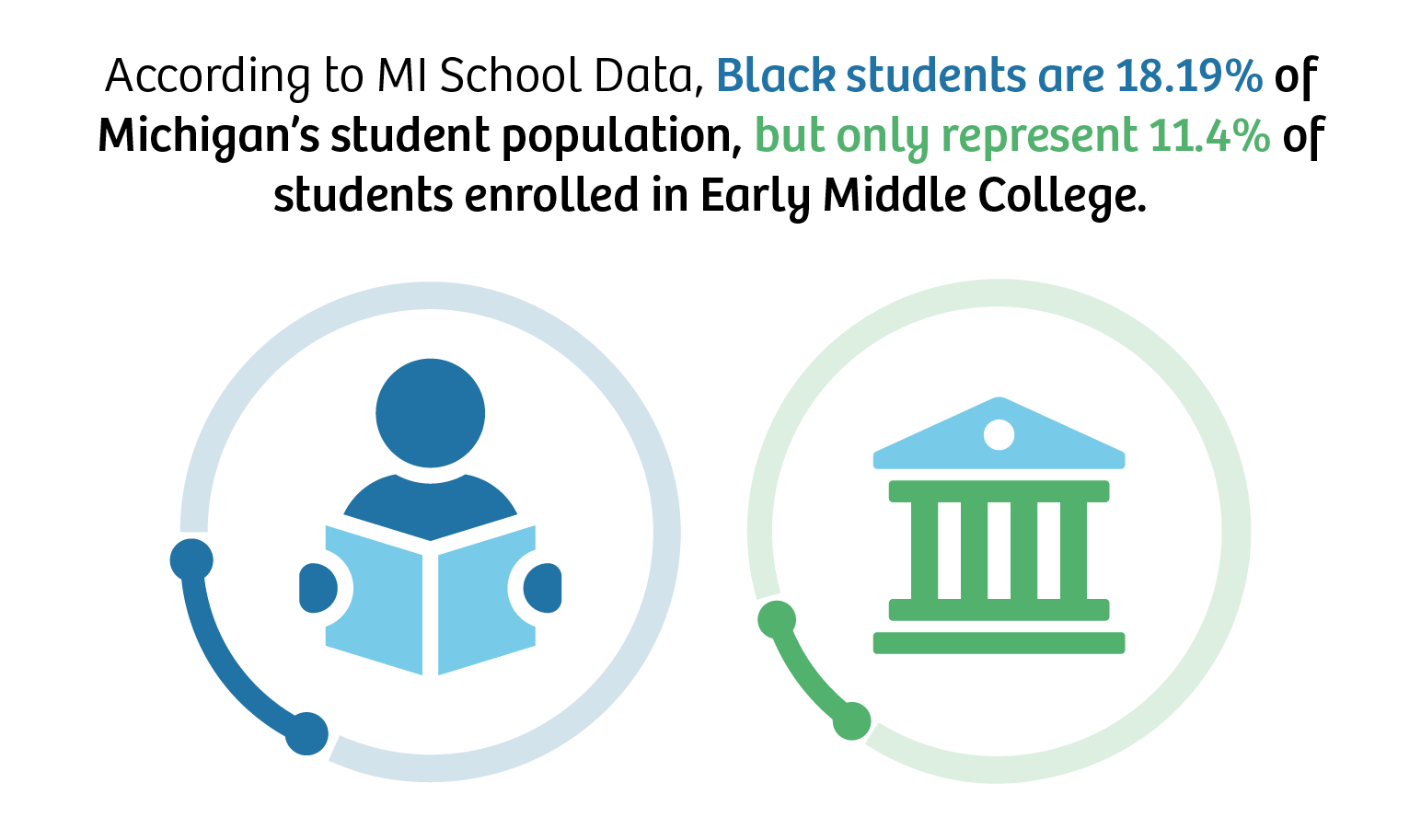
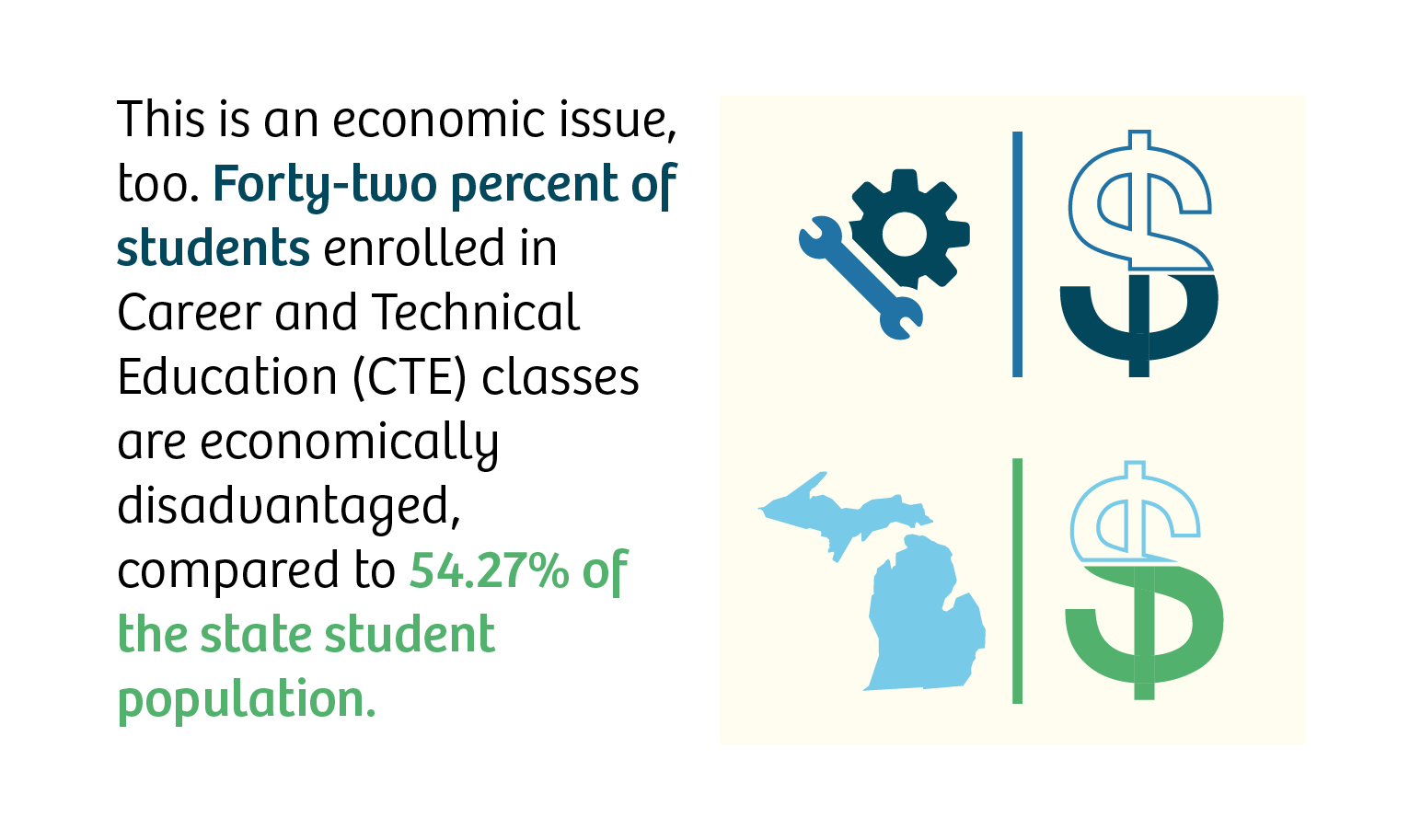
The students who complete these courses are far more likely to enroll in college, complete a credential, and earn a family-sustaining wage. The students who don’t have access — disproportionately Black and Latino students, students from low-income families, students in rural communities, and students in special education — are left to navigate the future without these tools.
- Advanced Placement (AP): college-level courses taught in high school that allow students to earn college credit by achieving qualifying scores on standardized AP exams
- Dual Enrollment: high schoolers taking college classes (often on local college campuses) that simultaneously earn them both high school and college credit
- Early Middle College (EMC): a five-year program that lets students simultaneously earn an Associates Degree (or postsecondary credential) alongside their high school diploma.
- Career and Technical Education (CTE): hands-on training in fields like health care, skilled trades, IT, and business
- International Baccalaureate (IB): a rigorous, internationally recognized college-prep program
The Problem
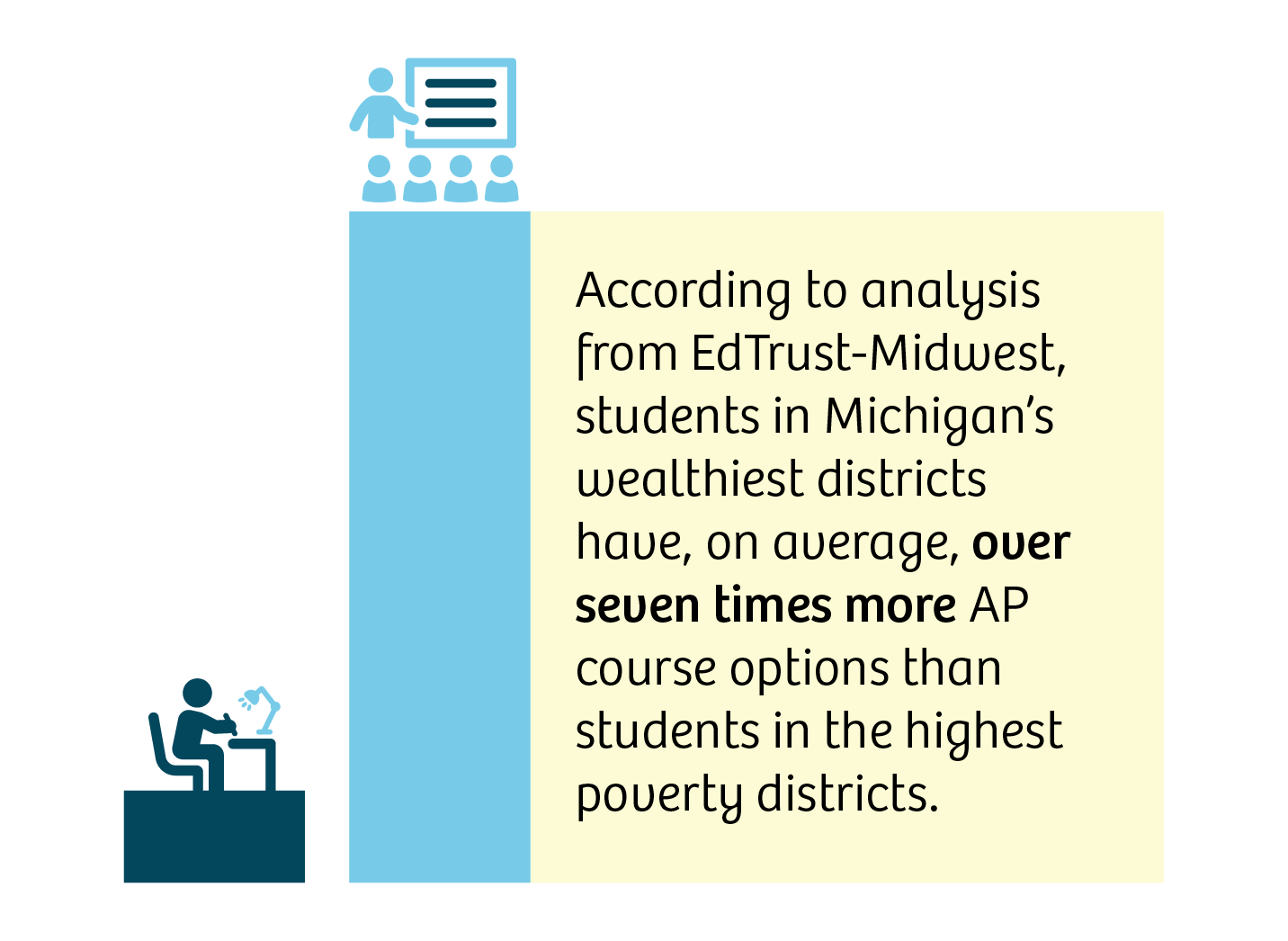
Closing the gap by 2029
To close opportunity gaps in access to postsecondary-focused coursework, we’re focused on four drivers:
- Building multiple pathways for every learner. No two students want the same future. Course offerings at every Michigan school should reflect that, making sure every student, before they leave high school, has had access to coursework that prepares them for college, career, or both.
- Securing dedicated funding. Access takes sustained state investment that rewards schools for getting students, particularly economically disadvantaged students and students in special education, to and through postsecondary-focused courses.
- Building the systems that make it work. Schools need counselors, particularly those who are well-versed in postsecondary options; career navigators, scheduling support; and the infrastructure and technical expertise to deliver these courses, especially in under-resourced communities.
- Preparing teachers to lead. Rigorous coursework is only as good as the educator in the room. Michigan should invest in the professional learning teachers need to bring these courses to every classroom, in every district.
Our members
- Autism Alliance of Michigan (AAoM)
- College Board
- Detroit Regional Chamber
- Detroit Parent Network
- Detroit Promise
- EdTrust-Midwest
- KConnect
- Kelley Cusmano, 2024–25 Michigan Teacher of the Year
- Kentwood Public Schools Office of Strategy and Innovation
- Launch Michigan
- Michigan College Access Network (MCAN)
- Michigan Community College Association (MCCA)
- Michigan League for Public Policy (MLPP)
- Sarah Giddings, educator
- The Institute for College Access & Success (TICAS)
- TeachMichigan
- Teach Plus Michigan
- Washtenaw Intermediate School District Office of CTE
Publications
- Aspiration to opportunity: Increasing access for every Michigan student (Ben Locke, Bridge Michigan)
- Michigan’s students deserve a future full of opportunities (Ben Locke, The’Gander)
- Ready for Rigor: Expanding Access to Rigorous Coursework in Michigan (EdTrust-Midwest)
- Increasing Dual Enrollment Access and Success (Michigan Community College Association Dual Enrollment Work Group)
- The Future Moves With Us, K-12 Education Summit presentation (Washtenaw ISD)
- Michigan Early Postsecondary Credit Programs: Aligning Goals and Strategies for Success (TICAS)
Get in touch
For more information, please contact:
Ben Locke,
Teach Plus Michigan Executive Director
blocke@teachplus.org