
Teacher LeadersMy Impact as a Teach Plus Teacher Leader
Beyond the Answer Machine: How a Michigan Educator Uses AI to Unlock Independence in Special Education
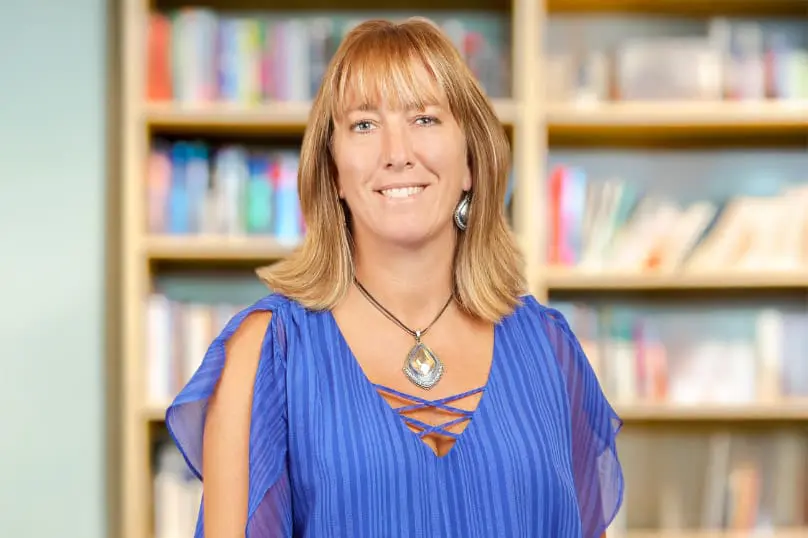
Heather Gauck is a Teach Plus Leading Edge Fellow and a National Board Certified special education teacher who has taught at Grand Rapids Public Schools in Michigan since 1994. A finalist for the U.S. Department of Education Classroom Teacher Ambassador Fellowship and a PBS Digital All-Star, she manages Innovation Classroom, a professional development website focused on classroom technology integration. Heather has taught at the graduate level on special education and technology and is a Magic School AI Ambassador. Her op-eds on education and technology have appeared in The Detroit News and PBS News Hour Classroom.
Teach Plus: You’ve been teaching special education for over three decades, and you’ve been working with technology, including AI, for a long time. How have you been using this technology in your special education classroom?
Heather Gauck: AI has become another tool in my teaching toolbox; it doesn’t replace good instruction, but it helps me personalize learning, remove barriers, and adapt materials, assignments, and visual supports for my special education students. It also streamlines behind-the-scenes work like lesson planning, progress monitoring, and accommodations, which gives me more time to work directly with students. I want students to see AI as a thinking partner rather than an answer machine. We talk about when to use it, how to question it, and why students’ ideas and voices are most important.
TP: You’ve written, spoken, and produced videos about using AI to help fulfill the education promise for students with disabilities. Can you share a specific story of how you use AI with your students?
HG: One example that stands out is how I use custom AI chat rooms to give students with disabilities more independence while still providing the scaffolding they need, guiding them through learning step by step instead of doing the work for them. For example, I created a paragraph-writing room that prompts students with simple questions like “Who? Did what? When?” as well other chat rooms for high-frequency words, book discussions, animal exploration, and responsible AI use in a safe, structured environment. What I love most is seeing students who might otherwise struggle become more engaged because the AI meets them where they are. It extends my ability to differentiate instruction, provide immediate feedback, and support success.
TP: In one of your published op-eds, you wrote about the role of failure in the learning process, noting: “When teachers step into discomfort, when we admit we are still figuring things out, we model curiosity and ethical decision-making.” How does this concept of stepping into discomfort play out in your day-to-day classroom practice?
HG: I think one of the biggest misconceptions is that teachers need to be AI experts before they can use these tools well. But my classroom and experiences with these digital tools have taught me the opposite: some of my best teaching moments have come when things did not go as planned, whether I was troubleshooting early technology failures or revising chatbot rooms that were too wordy for my students. When MagicSchool AI flagged a student’s inappropriate language, it opened the door to a deeper conversation about emotions, digital citizenship, and responsible communication, showing that AI can create meaningful learning opportunities rather than replace teaching. That is what stepping into discomfort looks like in my classroom; I want my students to see that learning is messy, mistakes are expected, and even their teacher is still learning. This transparency builds trust and models the curiosity and ethical decision-making they will need long after they leave our classrooms.
TP: As a Teach Plus Leading Edge Fellow since 2025, you’ve focused on the idea that teachers need to lead the conversation around AI in education. Can you talk about the work you are doing to move the field forward, and how you are helping other educators engage with these new tools?
HG: One of my biggest goals as a Teach Plus Leading Edge Fellow has been to make sure teachers have a voice in shaping how AI is used in education, because the people working with students every day understand both the promise and the challenges these tools bring. I’ve been sharing what I’ve learned through monthly professional development sessions for staff in my district, presentations at statewide conferences, collaboration with author Dana Suskind on her new book Human Raised, and by inviting State Representative Carol Glanville to see AI in use in our classrooms. Whether I’m working with teachers, policymakers, or the broader education community, my message is the same: AI should support great teaching by increasing access, personalizing learning, and helping all students succeed.
She Is a Champion for English Learners
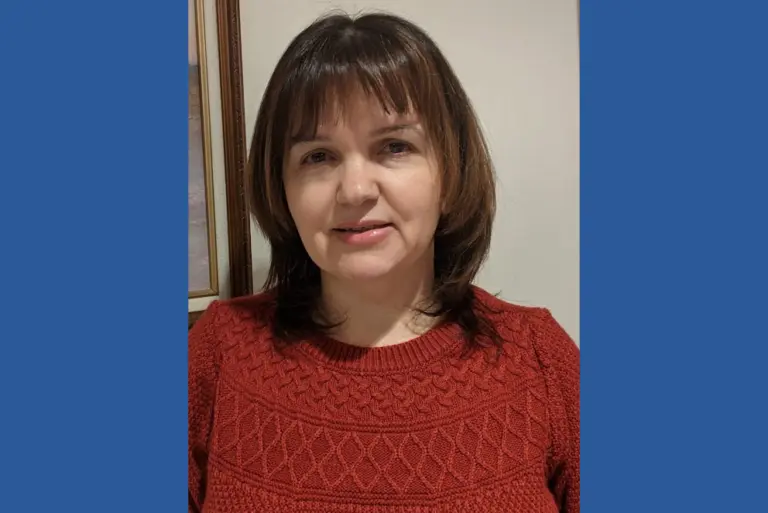
Maria Zak is a Teach Plus Massachusetts Policy Fellowship alumna and a kindergarten Spanish lead teacher at A.J. Gomes Elementary School in New Bedford. A dual-language educator who focuses on fostering cultural connections between home and school, she began her teaching career in the Dominican Republic. Maria holds a master’s degree in early childhood education from Lesley University, is certified in bilingual education through Bridgewater State University, and completed a two-year program in American Sign Language (ASL) at Mount Aloysius College. She also is a Project Sembrar (Sustaining Equity Through Mentorship For Bilingual Teacher Recruitment and Retention) alumna. Maria’s op-eds on literacy and multilingual learners have appeared in MA Latino News and The New Bedford Light.
Teach Plus: You began your teaching career in Santiago, Dominican Republic, where you worked as an elementary educator and a teacher for the deaf. How did those early experiences shape your approach to teaching kindergarteners today, particularly when it comes to early literacy?
Maria Zak: These teaching experiences gave me a strong foundation as an educator. I learned that children can become successful readers and writers in any language—English, Spanish, or sign language—when teachers take the time to get to know their students, recognize their potential, and support their individual needs. I believe that observing students, building on their strengths, and setting high yet achievable goals are key to helping them grow. I also believe that high-quality instructional materials and ongoing professional learning for teachers are essential for effective literacy instruction.
TP: You are an educator who was once a multilingual learner yourself. Looking back at your own educational journey, what is one thing you wish your teachers had known or understood about you when you were a student?
MZ: I wish some of my teachers had made me feel welcome and valued my ideas, regardless of my language or background. As an English learner, I had a voice, knowledge, and important experiences to share, even if I spoke with an accent. This experience has shaped my belief as an educator that every student has something valuable to offer, and we must create classrooms where all students feel respected, accepted, and confident.
TP: Massachusetts recently passed the Right to Read legislation to overhaul how reading is taught across the commonwealth. From your perspective as a dual-language educator, how do you see these new statewide standards impacting multilingual learners?
MZ: As a dual language educator and a multilingual individual, I understand that multilingual learners develop language and literacy skills differently from monolingual students. The impact of the new statewide literacy standards will depend on how effectively they are implemented and the quality of evidence-based professional development, authentic instructional materials, and the ongoing support provided. It is essential to recognize that students develop literacy in different ways and to provide instruction that fosters both bilingualism and biliteracy.
TP: Translanguaging is the practice of welcoming a student’s full linguistic background into the learning space. What is one practical way a monolingual teacher can implement this strategy so that multilingual students feel seen and valued?
MZ: For younger students, teachers can pre-teach key vocabulary using picture cards while incorporating students’ home languages. For students who are able to read, paired reading—using the same text in both English and the student’s home language—can support comprehension. Another effective strategy is to encourage students to brainstorm in their preferred language before a writing activity so they can organize their ideas in the language they are most comfortable using before transferring them into their writing.
TP: In addition to your classroom role, you serve as a mentor to high school students. What do you focus on when you speak to these aspiring teachers?
MZ: I am proud to support future educators and contribute to strengthening both bilingual and monolingual education in our communities. In our mentoring conversations, we talk about district and school expectations, as well as the importance of building strong relationships with students. We discuss creating classrooms where all students feel welcomed, respected, and valued. We also focus on building partnerships with families and helping students use their prior knowledge, languages, and cultural experiences as strengths to support their academic success.
